
No Rain, No School?
Elspeth Dugdale | October 2, 2026

So many of our UK conversations, over the last few months, revolved around the extreme heatwaves, lack of rain for the garden/farmers etc & how to cope during the long, hot days & nights. Everyone seems genuinely grateful and relieved with the cooler autumnal weather.
In Central Uganda, the knock-on effects of long periods of drought & reduced rainfall are devastating in a different way. Many WTA parents are subsistence farmers with their ‘garden’ (ie. their smallholding), to produce crops for daily food. But the ‘garden’ also produces cash crops to sell locally and that cash is essential to pay for school fees. And that cash input is the missing link.
Of course, attending secondary school in Uganda requires school fees. Private schools are not considered the ‘posh’ option and are the favoured choice even for the poorest of parents, if they want their children to succeed. Parents at Wobulenzi Town Academy can pay 50% at the start of term, followed by the rest after a few weeks. However, even that concession is a crippling & daunting amount for anyone on the poverty line.
Quite simply: little/no rain = fewer crops = no school = no future. It’s a simple, but brutal reality.
In addition, due to a certain fuel crisis, food prices are rocketing. Therefore, all school costs are rising & fees are bound to increase in the future. Talk about a vicious circle …
As a result, many young students have to be active & very resourceful in raising money for their own school fees. It’s extremely common to see primary children selling fruit & vegetables, firewood & snacks at weekends & after school. Many secondary students make bricks, work in garages, do hairdressing, keep goats & help in family businesses. Much as it is totally normal to play your part in family finances, this recent increase is now a necessity, made worse by the lack of 'normal' rainfall in East Africa. On the one hand, it is both impressive & inspiring to see such hardworking, young teenagers - but on the other hand it raises further concerns. A climate crisis becomes an educational crisis & a food crisis.
The drastic lack of rain has a direct effect on whether your children can attend school or not. In Uganda, missing formal education impacts your chances in life. One stern school sign, at a Gulu primary school, states ‘No Education, No Future’ - harsh, but accurate – at least in Uganda.

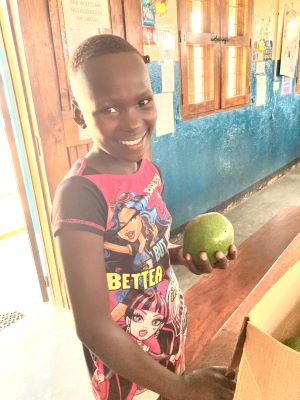
Both these students are great examples of this situation: Junior (16) helps his mum, Susan in her tailoring business. Divine (12) sells avocados from her grandmother’s trees to earn money for fees. However, with more Divines & Juniors around, there is good reason to hope and believe that the children’s hard work & resilience will help to keep them in secondary school. Despite the serious climate challenges that are bound to continue in Uganda, there must be a good reason to have hope.
On a final note, Uganda has a reputation for having one of the highest entrepreneurial mindsets among its population - many young businesses are often started by students, which is also encouraging.
Food, and hopefully rain, for thought.
PS Since starting this article, some rains have started, which is both good news and bad news. But, when rains are too severe and too torrential, seedlings and crops can easily get washed away and also causes chaotic and dangerous flooding in urban areas. Weather warnings indeed ...
